Classes and Objects
Python is an object-oriented language and almost every entity in Python is an object, which means that programmers extensively use classes and objects while coding in Python. Objects in Python are basically an encapsulation of Python variables and functions that they get from classes. Classes are essentially a template to create your objects.
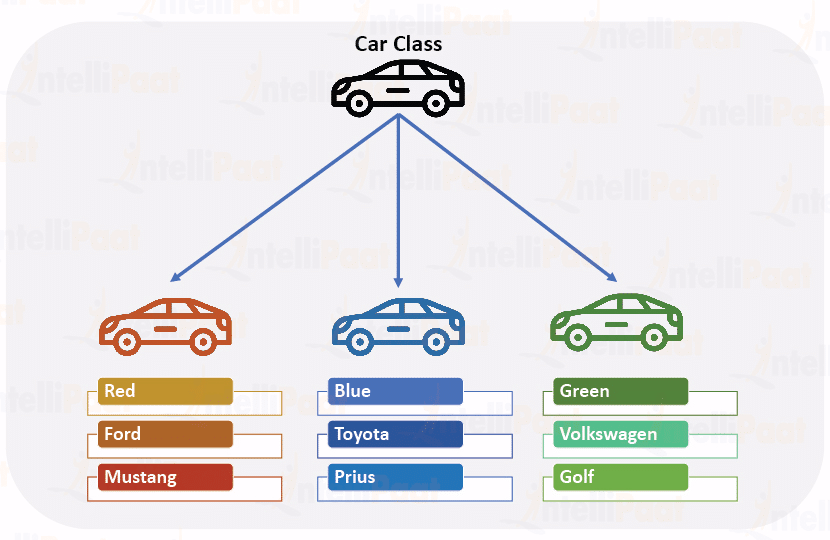
Advantages of Using Classes in Python Classes provide an easy way of keeping the data members and methods together in one place which helps in keeping the program more organized. Using classes also provides another functionality of this object-oriented programming paradigm, that is, inheritance. Classes also help in overriding any standard operator. Using classes provides the ability to reuse the code which makes the program more efficient. Grouping related functions and keeping them in one place (inside a class) provides a clean structure to the code which increases the readability of the program.
How to define a class in python:
     class IntellipaatClass:
           “Class statements and methods here'”
The create class statement will create a local namespace for all the attributes including the special attributes that start with double underscores (), for example,__init() and__doc__(). As soon as the class is created, a class object is also created which is used to access the attributes in the class, let us understand this with the help of a Python class example.
       class IntellipaatClass:
              a = 5
              def function1(self):
              print(‘Welcome to Intellipaat’)
              # accessing attributes using the class object of same name
              IntellipaatClass.function(1)
              print(IntellipaatClass.a)
